Marc Alessi Transcript
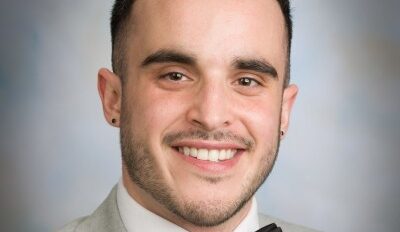
From one corner, you have scientists who are doing the factual work. And then in the other corner, you have disinformation. You have corporate interests that are permeating through all of these communication channels, and they have a lot of money. This communication battle is becoming more intense. And I do wonder how that will progress. Ten years from now, will fossil fuel corporations be able to completely shut out climate change communication? I’m not sure.
JANE
Dr. Marc Alessi is a climate science fellow at the Union of Concerned Scientists. In December 2025, he was recognized as a science defender, a select group of scientists who use science to improve the world and help people, including those who have taken a stand to protect science and scientists from political or other interference. Marc, I’m really interested in how you got into the field of climate science. What triggered it?
MARC
I have always been kind of obsessed with the weather. Since I was a kid in elementary school, I always knew I wanted to study the atmosphere. I remember when I was in first or second grade, I would be memorizing the Saffir-Simpson Scale, which is the scale that measures hurricanes and the Enhanced Fujita Scale and all this stuff. So, it’s actually, it’s not really a surprise that I ended up studying the weather. Even since high school, I was like, “All right, I’m getting my PhD in atmospheric science and I’m going to do what I can for climate science.” So, I think during grad school is when I kind of shifted more towards climate, just because I want to do more to impact climate policy, climate action.
JANE
You wanted to make a change, didn’t you? A change in the world.
MARC
Exactly. Exactly.
I see that you’re in an entity called the Union of Concerned Scientists. That’s quite a name.
MARC
So, the organization actually, it was formed in the 1960s by a group of MIT professors and grad students. And initially, it was more of like an anti-nuclear weapons entity. It was basically a group of scientists that wanted to try to prevent work on this, or at least educate everyone on this type of work. And from there, we just started to evolve. Now, we have a bunch of teams within UCS that work on different things. So, I’m in the climate team. We do a lot of work to help with climate advocacy, climate policy, climate science, right? There’s me and two other physical climate scientists who are actively doing research to improve methodology in climate science.
But we still have energy team, we have a transportation team. Basically, I mean, the goal of the organization is, or the mission, I should say, is to kind of advance science at the policy level. We want to bridge the gap between scientists and policy. And so, we’re really an advocacy group. And yeah, it’s an incredible organization, honestly, especially during this time. There’s been a lot of anti-science push in the United States, of course, by the federal government.
JANE
I was going to ask you about that. Yeah. Is that influencing your work?
MARC
I would say definitely. I think we at UCS have done a lot to fight back against a lot of these science cuts at the administration. And a lot of the things we do is telling our supporters, “Hey, we need to reach out to Congress today. We need to make sure we can do something to stop some of these cuts.” And a lot of it has actually been quite successful, which is nice, but of course, there’s still action being taken all the time. So, we’re constantly on the defense against the anti-science actions of this administration.
JANE
Yeah. This is pretty much the first time that that’s happened so strongly. What influence does it have globally beyond the United States?
MARC
It’s very surprising, I think, because I think the US has always been a scientific leader for a lot of the world. And it’s just absolutely crazy to me that this administration would try to dismantle the infrastructure that has taxpayers have spent all these decades investing in. And it doesn’t make any sense. And of course, for the rest of the world, from a climate science perspective, a lot of the work in the United States, a lot of the observations that we take in the United States, a lot of the scientific infrastructure, that affects everyone’s work in every climate science department around the world.
One of our observing agencies, the National Oceanic and Atmospheric Administration are NOAA. They have a lot of satellites. They have a lot of buoys throughout the oceans that take observations. And these observations are critical for any measurement of, for example, ocean temperature or ocean heat content, which is how we monitor climate change and things like this. So, if they dismantle these programs, it would impact everyone’s research around the world.
JANE
Yeah. Well, let’s go into something a little bit more positive.
MARC
Yeah, seriously.
JANE
One thing you say in one of your articles I’ve read is that we need three things. We need AI tools. We need climate information locally and globally. And this third one, in fact, I want to talk to you about all three of them. The third one is actionable information for decision makers. And so, I’d love to run through those three points, because I think they’re really like the foundation of what we’re talking about. When you talk about AI tools, how do we stand and what are we missing?
But basically AI in climate science is still kind of a black box. And that goes for AI just in general. AI, it gives you an answer after training or learning from a bunch of data, but it doesn’t really tell you how it made that prediction. And so, I think AI as a tool in climate science is good because it can reveal new relationships in our climate system potentially. It can do all of these very exciting things like downscaling, like data gap infilling, like climate model emulation. We can talk about all of these things too. So, AI as a tool in climate science is exciting because it can do all of these very cool things that actually will advance the field.
But again, there’s also these negatives, like the fact that it’s a black box, like the fact that we don’t really understand some things going on in AI.
JANE
The second thing you talked about was that we need climate information at local and global or national levels. And you made a comment somewhere that at local levels in some countries, it’s really hard to get that information.
MARC
Yep. For me, the project I’m working on right now is using AI or machine learning, which is a type of artificial intelligence to fill in data gaps, especially in the global south locations. And this is because we’re missing a lot of climate data in regions that need it the most. The reason why we need it is because I think we have to take a step back first and say, there is a field of climate science called climate attribution. And this is basically the field that says, this event was, for example, five times more likely because of climate change, or we had this much more flooding from this extreme event because of climate change.
So, it basically separates out how much of this extreme weather climate event was due to anthropogenic climate change. And in order to carry out a study like that in climate science, you need to have a long and reliable record of observations because that way you can basically test a climate model to see that it can replicate observations quite well. In the global south, there is unfortunately not a long and reliable record. For example, temperature extremes, precipitation extremes, these type of events that we need these observations in order to conduct these studies. And so, what I do is I basically use machine learning to fill in these data gaps in global south regions.
And once that happens, once we have a data set that fills in all of this data, we can conduct these studies to be like, all right, this drought in, for example, this hell region of Nigeria was five times worse due to climate change. And then you could take that information and say, “All right, we had this many more deaths. We had this much more economic damage.” Then you could take that further and you could activate something called the United Nations Loss and Damage Fund, which basically is a fund that rich countries pay into and is kind of distributed to more vulnerable countries when they’re affected by an extreme weather event.
JANE
Is that working today? Do rich countries pay into it and does it get distributed?
MARC
So, it’s still in the operationalization process. So, COP24 last year in Baku, Azerbaijan, that was like the climate finance cop. That was when countries had to be like, “All right, I’m going to commit this amount of money to this fund.” We didn’t really have a strong showing. Some countries say they’re going to pay money. All of this is still, I think, actively happening. And I’m really hopeful that something like the Lost and Damage Fund will become a much more serious part of climate action down the road. I mean, I think for the next two or three years, it’ll be hard to do anything without the United States kind of it’s taking a backseat. It’s not being a leader at all.
It’s not pushing this fund forward, but hopefully in a couple years, something will happen. But yeah, so my research is really just trying to improve this methodology of this very important climate science field that could inform these decisions on how much money a country could get.
JANE
Yeah. And don’t you have to, in that reasoning, provide information that relates climate damage to someone else’s actions? Is that what you call climate attribution? Is that the right term when problems are attributed to companies?
That is actually a type of climate attribution that is called source attribution. So, yeah, source attribution is kind of a newish field of climate attribution and it basically says, for example, one oil and gas company called this caused this percent of this drought or heat wave in this country. So, that is like a newish field that’s starting to really come up. There were two really influential papers in the last two years that did this. So, I think that will continue to become more of a thing in climate science.
JANE
Are they able to attribute it to certain sources?
MARC
Yeah. No, I mean, these are peer reviewed scientific studies. Because we know how much these companies have emitted, we know how much the globe has warmed. Attribution itself is a pretty mature field. It’s been going on for over 20 years, but now they’re saying, “All right, now that we understand attributing an extreme event to climate change in general, now we should start breaking it down and be like, all right, this company is responsible for this much, this company is responsible for this much.” So, that is a new field. It’s still maturing, but they are scientific studies, they’re peer reviewed, they undergo in a very intense revision process.
So, there are scientific studies that are trying to do this now, and I think they’ll become much more common in the future. Yeah.
JANE
Good. You talked about the need for interdisciplinary and cross-sector partnerships. Exactly. And that made me think of a conversation I had with Joyce who connected us about how scientists and lawyers, climate scientists and lawyers need to learn to talk to each other. They need to understand the reasoning on each side.
MARC
Oh, completely. Yes. And actually, it’s funny you say that. At least in the United States, there’s something called the Sabin Center for Climate Change Law. This is a part of Columbia University actually in New York City. And they’re hosting a second conference that brings together lawyers and climate scientists to kind of work on climate litigation strategies. So, this is actively happening. It’s all very new. We went to the first conference of this last year. It was exciting to be in a room that was half lawyers, have climate scientists, and to follow how we could kind of help each other. But the second one is in June.
So, I’m really looking forward to hopefully actually presenting this research at it, because any advancement and attribution is in advance or could help climate litigation.
JANE
You mentioned a workshop that you were involved in, and it was called from science to action. Did action come out of that workshop?
I wouldn’t say the workshop had any specific actions out of it. It was more like a workshop that brought together scientists like me who are doing climate attribution research, but it also brought together people who are actually actively using AI in some form of climate action. So, for example, we had a person from a major farming company in the United States come and describe how they’re starting to incorporate AI in their climate research for their company, how that helps farmers. We had someone from a water aquifer company talk about how they’re using AI and what they’re doing to achieve a more sustainable water usage.
There were individuals from city governments that came, talked about how AI is helping with where to plant trees in the city, things like this. So, it was a really cool workshop that brought together people from so many different fields just to kind of touch base on where we are advancing in climate science and AI. It’s a very interesting intersection, I think.
JANE
And I would imagine there were a lot of connections that were made between people at that workshop.
MARC
Yes. Oh, yes. No, it was really exciting.
JANE
And the results of that would go far beyond the workshop itself.
MARC
Exactly. And that is the reason why these workshops are so important. I think making these connections, sharing our research, sharing our applications, I think that’s really important.
JANE
Mm-hmm. You talked about the, in climate science, the difference between machine learning and GenAI. I sort of understand each separately, but how does that come together or not in your work?
Yeah, it’s a really good question. So, I will just say generative AI is actually a type of machine learning, but in climate science, we kind of use a different type of machine learning, a type of machine learning. For example, I use something called convolutional neural network in my research, which is just a type of machine learning. And the reason why I distinguished these two things in this blog that I wrote is because generative AI, which the large language models use like ChatGPT, Azure, all of these large models that you can use online now, that is very different from what I use AI for. Those are very computationally expensive. They require these huge data centers to be built, things like this.
Our machine learning, what we’re using machine learning for is much less computationally expensive and it’s a much more simpler form of machine learning, which is nice because you don’t need to build these large data centers just to do our science.
JANE
When you say it’s simpler, is it because you work with less data or what makes it easier?
MARC
I mean, we do work with a lot of data. I mean, because of course climate science, we have all of this data from these climate models, terabytes of data that you can learn patterns from or train off of. Generative AI, yeah, they use even more data. They need even more resources to run their models. So, yeah, I mean, because generative AI uses all the words and all languages, things like this. It is a huge difference. And our models are just, they train off of less data, basically.
You talked about downscaling. What is downscaling?
MARC
Climate models, they are very, what I would say course, course resolution. First of all, climate models are gridded around the world. So, they give you one temperature value, for example, for a whole region of the world. So, just as an example, maybe a climate model will give me one temperature 50 years in the future for San Francisco, California, but that temperature is supposed to represent all of the Rocky Mountains, all of California, all of this.
And so, downscaling in climate science basically is… There are many methods to downscaling, but basically, it will take this one temperature and it will downscale it so that you can get more regionally accurate information, right? So, you’re not just looking at one temperature for the entire region, you can get more accurate temperature predictions, precipitation predictions for a local, localized weather or climate.
JANE
And these are predictions you’re talking about. So, their predictions come from past data, I presume.
MARC
I would say there are a few different types of downscaling. So, for example, for AI, you can look at a climate model, you can train the AI model to be like, all right, if it’s this temperature here, normally it will be this temperature on a localized region. And yes, you can use past data to help with that AI prediction.
Interesting. You talked about filling in data gaps with machine learning is an exciting avenue of research. Why is it such an exciting avenue of research? What do you sense about that?
MARC
Yeah. For me, I think this really goes back to what I was saying earlier about attribution. I think if we can use AI to fill in these data gaps, especially in the global south, if we can have more robust data sets to represent the temperature of or precipitation of the past, then you will be able to conduct these more robust, more scientifically sound climate attribution studies, which of course could help climate litigation, could help the loss and damage fund. So, that’s why I think it’s a very exciting avenue because I think it will kind of change the game.
JANE
You said that as a scientist, you need to do more to get the public to trust AI and to trust the information you have. How can you build trust?
MARC
Yeah.
JANE
That’s a pretty general question. It probably applies to lots of people in lots of fields, but in your particular case, when you talk about trust, how can you build it?
I think especially today, it is really hard to build trust in the field of artificial intelligence because we have these large language models now and a lot of people are like, “I don’t know if this is giving me accurate information, things like this. “A lot of people may be wary of what the model is telling them. So, it’s hard because our AI models, they’re different, they learn patterns differently. So, from that perspective, we’re already starting in a very difficult position to build trust with AI and climate science, I think just because it’s always in the news and a kind of negative connotations
But I think building these partnerships with communities, especially now that we’re kind of at the application stage in some ways, like this water aquifer that uses AI to become more sustainable or these farming communities, trying to build connections with them to let them know these are the tools we are using, this is how well it does in the past, this is how it compares to our previous methods. I think just keeping the scientific process very open, just building those connections with the people that end up using our products is very important.
JANE
You talked about something that I discovered for the first time, which I think is fantastic, the term FAIR. It applies to so many fields in addition to yours.
MARC
Yeah, yeah.
JANE
I looked it up and found out that in fact it does apply to a lot of other fields, but I find the FAIR principles really strong.
The FAIR principles, F for findable, A for accessible, I for interoperable and are for reusable. I think scientists, they’re curious about the climate system. They’re curious about the atmosphere. They want to know how the world will change in the face of anthropogenic climate change. And so, I think to an extent, scientists will follow these FAIR principles because they want their science to be findable. They want it to be accessible. And that is something that a lot of us try to think about, and especially reproducible. I think that is something that permeates across the entire scientific community.
I will say, I think we still struggle, especially with accessibility, a lot of scientists have kept in their corner and haven’t really engaged in policy. They haven’t engaged in climate action. They haven’t engaged in the application of their products. And I do think this is kind of a mistake, especially now that there’s such kind of an anti-science push, especially in the United States, but also it’s kind of occurring across the world. Climate scientists need to get out of this corner. They need to be communicating their work. They need to be joining climate action applications.
They need to be communicating to the policy level because if they don’t, I think government, media, the traditional, I think folks who do communicate are science to the public, these are becoming less reliable. So, I think climate scientists need to have more of a role in communicating their science.
JANE
One advantage you have over other disciplines is that climate is something we can all relate to. We all know what climate is and we all experience it around the clock.
MARC
Exactly.
JANE
And so, you as a scientist and your colleagues can be making something relatable that is already meaningful for us. I still understand what you mean when you say that a number of scientists remain in their corner. Maybe they just genuinely get so engrossed in their work, or is it because they don’t want to have to respond to things on the social media where if you go out and give a little talk on social media, you can get attacked from all sides.
No, I think it is a lot of things. I think a lot of scientists don’t want to do the work of communicating their research. I think a lot of scientists aren’t trained to communicate their research. I think most people just go to scientific conferences, they go to a bunch of talks, they give a talk, and that’s the extent of communicating their research. So, in one way, I think it’s not scientist’s fault. I think the system has just led us to be not have the ability to communicate as much as we should be doing. So, I think that definitely needs to be changed. And I will say, I think that shift is being noticed by the community.
I think a lot of scientists are starting to be like, “All right, we need to step out of our corner. We need to defend our science, especially with all these attacks that are still happening.”
JANE
That’s good to know. Overall, you feel optimistic about the future of climate attribution or I don’t know what word to use, what general word to use, but the work you and your colleagues are doing about climate, do you feel positive that the advantages and benefits of that will become better known and accepted by everybody?
MARC
The community is going to keep doing these studies no matter what. It’s really just a question of, will the studies be communicated to the public in a way that they could relate to? If there is a powerful hurricane that hits Florida and the precipitation was 50% more intense because of fossil fuel caused climate change, is that messaging getting across to folks living in Florida? That is something that’s really important. It’s kind of, I think, a communication battle. I think from one corner, you have scientists who are doing the factual work and then on the other corner you have disinformation, you have corporate interests that are permeating through all of these communication channels and they have a lot of money.
So, it’s hard for us to communicate our information to kind of fight back against this. So, I think that is an issue. And I think this kind of communication battle is becoming more intense. And I do wonder how that will progress. So, 10 years from now, will fossil fuel corporations be able to completely shut out climate change communication? I’m not sure.
JANE
It’s not impossible, is it?
MARC
It’s not impossible. Yeah.
JANE
And it comes down to money, as you say. So many things come down to money even more so than in the past, it seems to me.
MARC
Exactly.
JANE
Yeah.
And a lot of these falsehoods, I feel like they have been used for decades and they are pushed by fossil fuel interests and they of course have the money so they can communicate it quite quickly to the public. And now I think AI is another tool that kind of helps fossil fuel companies communicate these falsehoods. For example, this one’s been used since the 1990s. Climate science, we don’t truly understand everything. Climate science, climate scientists don’t have all the pieces understood. There are errors in climate models, there are biases in climate models, things like this, which I think really affect how people talk about climate science and understand climate science, I think.
And of course, like you had mentioned, I think there’s a lot around renewable energy falsehoods, like how expensive is solar energy? Can we store the energy from solar panels during the day so that it lasts overnight? Do we need wind all the time in order for wind turbines to be providing energy at all times? I think a lot of people will just be like, “Oh, we can’t build this because we can’t have the energy 24/7.” But these are just things that we have figured out. And these are things that we are actively trying to build in energy infrastructure to combat these issues.
JANE
I wanted to ask you, Marc, some general questions about the future because you’re very future oriented.
MARC
Yes, of course.
JANE
All of your work has, I would say you’re working in the future.
MARC
Of course.
JANE
If we can say it that way. And I had a few questions sort of general interest. One is, what misconception do you think most people have about the future, if there is one in your opinion?
I think, and it might be specific to the United States, but it could be specific to the world. I think a lot of people are pessimistic about the future. I think the future can be scary. And I think the reason for that is because it kind of goes back to this communication battle I was talking about. I think climate scientists are saying, “We can solve this issue. We can literally change our infrastructure, our energy infrastructure to save the planet from these climate catastrophe from this climate destruction.” And on the other corner, you just have a bunch of people saying, “It won’t work. Renewable energy is too expensive, blah, blah, blah, all these false statements that don’t even make sense anymore.”
So, I think that affects how people think about the future. I really do. I think not enough people are optimistic. I hope that changes soon. And I do kind of see it. I think more younger people are trying to step up and be like, “We can make our future. We have the plans to do it. We know the problems and we can fix them.” So, I think that keeps me kind of hopeful. And I think that is a current misconception, but I think it can change.
JANE
It’s interesting what you say about young people.
MARC
Yeah.
JANE
Overall, you feel young people are more optimistic about the future and that they really do believe they can make a change?
I think overall currently, young people are definitely pessimistic, but I think there are these, some younger people are stepping up and trying to lead this movement of optimism for the future. And I think we need to see more of that, whether it be scientists or politicians on the world stage. I think a lot of folks are always doom and gloom, and I think that’s kind of a mistake. I think we need to communicate. Renewable energy is cheap. It can literally solve this major global problem, and we have the money to do it easily. To me, it’s like we have the winning message. It’s just getting that across to enough people.
JANE
Yeah. That’s very positive what you said. It’s also a bit overwhelming when you try to think about how we can get it across.
MARC
Oh, for sure.
JANE
Can you imagine that you have a magic wand and with that magic wand, you can create any technology, any new technology. What would you create with your magic wand?
I mean, I think for me, it would be something renewable energy related. There’s still some kinks to be worked out in renewable energy, like for example, energy storage. I think batteries are becoming much more advanced, but I think they can do even more. And if we could just solve kind of the battery issue overnight with a new technology, I think that would just be entirely game changer. There’s also a lot of talk of technology like direct carbon capture. This is like technology that removes CO2 from the atmosphere.
But I worry about technology like this because I think it kind of gives fossil fuel companies an okay to continue their pollution, to continue their economic model of digging fossil fuels out of the ground and using that for energy, which is crazy because we have the sun and we can use that for energy.
JANE
Yeah. If there were one thing you could change about the world, not necessarily technology, but just a major change about the world, what would it be?
Besides the fact I would love to change the entire energy infrastructure overnight to renewables, another thing I would change, I think there are some people in the world that are very greedy. I think money drives so much of our world, especially fossil fuel companies. I think they’re always focused on profits. They’re always focused on making money for the investors. And because of that situation, we are still using fossil fuels. We are still using them quite extensively. I think renewable energy could have been studied faster decades ago. I think it could have been employed faster decades ago, but it’s just that we have these people who are greedy and want to keep making money.
And I think that is the reason for the climate catastrophe we’re in. So, if I could just change that overnight, that would be really nice.
JANE
What can individuals do today to influence the future, to make a difference on an individual level?
MARC
I honestly think there’s a lot of things people can do. I think they can keep talking about climate. They can join protests. They can join rallies. They can elevate the voices of scientists who need a platform to talk on. I think young people especially should start running for office. I think we need to see more of that because I think there’s a lot of hope that could come from that.
And Marc, how do you see your own future evolving, say, over the next 10 years or 15 years?
MARC
I mean, I really like the science that I do. Like I said, I’ve always been into the weather and climate since I was a child. And I really want to be helping advance the science in a way that directly affects climate action. I think that is very important for me. I think all of climate science is very important, but a lot of climate science, it’s very niche. It doesn’t really change anything on the policy level, but there are some parts of climate science like climate attribution, this research field literally directly inform, I should say, climate lawsuits. They can directly inform the loss and damage operationalization.
And I think that is a really important space to work in and I definitely want to keep working in that space.
JANE
Great. Marc, the motto of my podcast is, how can we shape the future before the future shapes us? Do you have any sort of final thoughts or any last words that you’d like to share?
MARC
That is difficult. It’s especially difficult from a climate science perspective because in some ways, you kind of lock into the future in the present. And that’s because we’ve already emitted a certain amount of emissions and the planet is definitely going to warm this amount. But I think right now is the critical point where we need to really talk and kind of change our entire energy infrastructure. I think these actions need to be more aggressively taken, especially if we want the future to be not as full of extreme weather and climate events, not as full of sea level rise, not as full of all of these domino effect, governments, unstable, mass refugee crises, things like this.
So, I do think there is so much we can do today to shape the future. But again, it’s hard to say what will happen with the communication war. What will people actually vote for in democracies? We really need to get out there and hopefully carry that message of optimism, of hope of we can actually change things for the better. The IPCC, the climate reports that come out of this international science community, they say, “We could have a world like this, we could have a world like this, we could have a world like this, and it’s really up to us what path we decide to take.” Just to kind of wrap up and bring it back to the beginning, I think AI is an important tool for climate scientists.
I think it is another tool in our toolbox, right? We have climate models, we have simple models that we use. We have AI now, and that’s just another tool that scientists are using to understand our climate system. So, I think it’s an exciting tool, but we need to be careful about it. We need to communicate it. We need to build trust with it. We need to make sure we cover our bases because the science is important. I think we’ll keep doing that as a community.
JANE
Well, thank you very much, Marc, for all this information. And I was very interested in your opinions about the different subjects concerning the future. I think you’ve made some things clearer for me and I hope you have for my listeners too about climate science. Thank you very much.
MARC
Thanks, Jane.
 SUBSCRIBE TO IMAGINIZE WORLD ON YOUTUBE
We talk with forward thinkers, scifi visionaries and pioneering organizations about people and society, AI and humans, the earth and survival. Read more Imaginize.World
Nothing matches your request, please try again with a different search term.
 Share
Share