
Click on the links in the side bar to read the parts of the transcript that interest you the most.
Click here to go back to person page.
Below is the full transcript.
The Transcript (Audio podcast version)
Teaching, researching, experimenting!
Right now everything is happening in an incredible speed. So it’s really difficult for ordinary people to comprehend what is really going on. So I think science fiction now is more than a genre fiction. It’s basically realism.
JANE
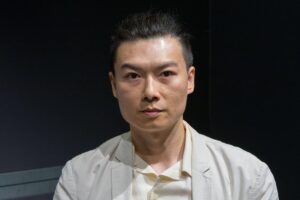
Today I’m with Stanley Chan, and so happy to be with him again. He was my first guest on Imaginize World Podcast. Stanley believes that the boundary of fiction and reality is becoming increasingly blurred, and that technology is advancing faster than ever before, and reality may even be outpacing fiction. We need a symbiotic relationship between humans and AI. We need to exist together. It’s not just adaptation, it’s a question of evolution.
Stanley, I was doing some research about you and I saw that you’re just present in so many organizations and you’re doing so many things I can’t imagine how you find any time to do anything, even talk with me. Can you describe a little bit what you’re doing these days?
STANLEY
Yeah, it seems like I’m a little bit mouthful or handful of everything too many things on my plates right now. So I mostly I’ll say my day job will be a teacher. So I teach in HKMU, Hong Kong Metropolitan University on creative writing and literature and this semester we have AI and digital narrative. So it’s a new program for master students. But besides that I did a lot of side jobs. So writing and co-creating films, animations, VRs, and even theater, like immersive experience. So for different projects I’m also like play the role as consultant for many as you can see research institutes like Bagun Institute in Peking University and also some other institutes as well. So I love to, you know, cross over different areas, talk to different people and try to steal a little bit of their thoughts, their ideas, you know, and put into my own like little pocket and on writing or whatsoever. So I love to exchange ideas. That’s driven by my curiosity since kid.
Yeah, I just can’t help stop like thinking about things and writing about things, maybe.
JANE
When you talk about stealing things from other people, I think a lot of people steal things from you too. Which is that’s stealing in the good sense of the word. Right, right. Being influenced by other people, other writers.
STANLEY
Yep. Yeah, as Picasso put it, like the best artists, they steal right.
Sci-fi is both realism and reality, beyond fiction
That’s right. I remember when we talked before you talked about the impact of science fiction that you felt was unique as a form, in that it it builds a link between fiction and reality and you added and the past and the future. Do you still believe that?
STANLEY
Yeah, I actually believe that more than ever before. So I think because right now everything is happening in an incredible speed, incredible pace, right? So it’s really difficult for ordinary people to comprehend what is really going on and what is the consequence and what is the relationship with our daily life.
So I think science fiction now is more than a genre fiction. It’s basically realism and it’s reality. But it’s trying to catch up with the reality, but some writers succeed but some might fail, you know, you know what I mean. So it the because the reality going in divergence. So it’s going in different directions. So maybe some of our predictions or speculations fall into a that category which is actualized, become something real, but some might going even crazier in a you know insane way, so it’s not happening yet, but we couldn’t say it’s illegit to imagine, right? So all this imagination is equally legit and valid to human life.
Reality is outpacing fiction
Yeah, I saw a headline of an article. I think it was might have been in Wired about about you. And the title was Is Reality Outpacing Fiction? And I think that’s what you’re talking about, whether reality is possibly outpacing fiction or is fiction outpacing reality.
STANLEY
My experience, personally, I think the reality actually is outpacing the fiction because I spent a couple of years traveling around the world, as you knew it. I’ve been involved into many different communities, many different contexts, like in Silicon Valley, you can see all this, you know, tech roles.
Like billionaires they dream of becomes like immortality, right? And they try to invest like billions of billions of money on so called AGI, artificial general intelligence, or right now Trump put it SI, super-intelligence. I’m not quite sure what does it mean, but I think this is something totally bizarre and surreal in a way, but it’s it’s happening for real, right? It’s not just happening in one place, one country, one company, but is impacting all around the world globally, right? I think there’s no any individual can escape from that kind of hype or narrative, right? So big because right now it’s become something existential level of crisis or whatsoever. And I think this is something maybe some science fiction writer they did touch upon that, but not in that depth. So I think this is very profound and even something more bizarre happening all around the world in different categories and we could not even imagine. like for example, like mathematics, right?
Mathematicians right now they are kind of being threatened their job will be taken over by AI, by models because they can, you know, making faster, more efficient like proof on some, you know, historic unsolved problems. So I think this is just one of the areas, but many, many other areas is changing. Like it’s changing unexpectedly. And I think it’s not just one layer of perspective or narrative is overlapping and it’s like quantum physics is like entangling all together. So it’s a super complex reality right now. So I don’t see any, you know, single novel or stories can encapture this kind of zeitgeist so far. So I think maybe it’s time to move on. It’s time to move on to another kind of artistic expression. I don’t know what it is yet, but maybe it’s emerging.
Symbiosis between technology, AI, and humans
I bet you’re thinking about it a lot. Yes. And looking for it. That’s knowing you. I would guess that your mind is moving in that direction as much as possible. You talked about I forget where in one of the interviews you did, about symbiotic relationship between technology, AI, and humans. Can you talk about that a little bit? I found that idea very interesting.
STANLEY
Right, right. So yeah, in recent years I’ve been deeply involved in this kind of interdisciplinary discussion so around this kind of concept symbiotic society or symbiotic system or whatsoever. So basically it’s not a new concept and it was first introduced or borrowed from biology. So from the very beginning of life form emerged on earth, right? So there are two different kind of structures is one is kind of very ancient bacterial and the other kind is some kind of like archaea (archi microbe). So basically they just merge together but without swallowing each other and without digesting each other.
So basically they have each part of them still functioning. So this is how we can develop this kind of life so far from human being to all this plants, animals, and even microbes on the earth can still exist because we improve the efficiency to transform the energy. So this is how symbiosis happening from the very beginning. (Footnote: Life on Earth likely originated independently in two distinct lineages: bacteria and archaea. These two types of cells evolved from a primordial, nonliving ancestor, suggesting that free-living cells emerged twice during early evolution. Ref: Smithsonian Magazine)
Carbon-based Species, coexist with Silicon-based Species
So I can see this pattern repeat and over and over again in and in history, so in the scale of billions of years. So right now I think maybe it’s time for the next level of symbiosis to take place, which is us like a carbon-based species, coexist with a silicon base whatsoever you call it beings, intelligence or life, even if we recognize it as certain kind of life form. So it it would be like that.
So no matter is like externalize it, like we’re using phone, we’re using all these laptops and all these cables or the even this network, right? So it’s like an internet externalizing our memories, our data storage, our reasoning and speculation, etc. etc. into this kind of external infrastructure, but also it can be something internalized. For example, Neural Link from Elon Musk could be one of the kind. so I think this is happening in either ways.
Taoism to transform mindset?
And I think if we couldn’t like properly transform ourselves like no matter is like physically, psychologically and consciously, and that means we couldn’t find a way to, you know, collaborate and to calibrate and to, you know, communicate with another different kind of like intelligence within the same structure.
So that would be a huge problem. There’ll be a huge division, in my opinion, because it’s already here. There’s no way you can rip it out from our civilization. Otherwise, we were just going backward to the pre modern society before the internet, before all this, you know, silicon based machinery or whatsoever before they were invented, right? So the only way I thing for now is to find a way, find a protocol for symbiosis. And this is not easy. And also reminds me of the Chinese ancient philosophy, Taoism. you know in Taoism, like no matter if yin and yang, black or white, good or bad, they are interdependent, like they are interchangeable. So there’s no black, there will be no white.
They if there’s no good, there will be no bad, no evil either. And so actually the very basic concept about the nature is symbiosis, symbiotic. So I think maybe we should go back to the very beginning, the root of ancient philosophy, and try to learn something from there and try to refuse, no matter if from the machine perspective or from the human perspective. And especially from our social norm, from our culture constructive perspective, we need to rethink and we have to refuse a lot of like standards and I think yeah, this is the most urgent problem I can see in in front of us.
RSI. Recursive Self Improvement. For humans.
You say urgent. so if we don’t I don’t know if we can say solve it, maybe it’s not a question of solving it, maybe it’s a question of moving beyond it. I think there’s some idea of movement involved. we will come to an end. Right. As carbon based human beings we will not survive. I’ve done some reading about a term that was new for me called recursive self improvement. Yes. R S I.
And I understand that it’s used primarily in terms of AI improving itself. And when I read about it, I thought perhaps it’s a question of people. We as entities should also be focused on recursive self improvement, what never stops. We could it’s like a cycle that just goes on and on and on. Does that make sense to you?
STANLEY
Yeah, totally. Yeah, interestingly, you know what? Because today, you know, Google, Gemini, they launched the new the latest model and one of their scientists claimed that they solved the RSI problem, which means they right now have the recursive intelligent model which can self taught, self evolve without human supervising.
And the guy who posed this on X, he said, Okay, there’s nothing else I can teach to the machine. Now I can quit my day job and pursue my dream as a coffee maker. so he wants to make some coffee and he wanted to pursue his dream. So I’m not sure if this is legit. I didn’t test it for a while. So because everything is happening too quick is like arm raising, right? All these three like big tech companies, Google, OpenAI and Anthropic. So they just keep chasing each other. So it’s like the rabbit and the turtle game. So it’s like you’re getting ahead of the game and later on maybe the other players getting ahead of us.
So I think the key question is how can we define this kind of recursive intelligence and what do we mean by life without supervising from human beings and you can because right now we know that without a prompt, right? Without giving a purpose, giving a task, a machine couldn’t do anything by itself, right?
Different purposes in students
So does it mean recursive intelligence can find some kind of purpose, it can self create some kind of task and even find some purpose to fulfill by self? I’m not sure. So and what what’s the differences between being conscious and being recursively thinking and learning by self? So I’m not quite sure about the the the boundaries here. But I think, yeah, on human beings we have the same problem as well. Because I teach in the universities. You can see very clear the students are quite different. Some are quite self-motivated and they just love to learn more and they want to read more, they want to write more, they want to ask you more questions whatsoever.
But some others they might feel a little bit passive, right? So if you don’t give them any homework, you don’t assign them any, you know, paper to read, you don’t have a very clear guideline about, this is what we’re gonna do next week and what you’re gonna submit by the end of the semester. They’re just doing nothing and they don’t even care to listen to you on the class. So I think this is very two kinds of students nowadays. And even with AI is getting worse, right? So because you can easily get any kind of answer and and finish your homework and even finish an assessment, a paper, whatsoever by using AI, very efficient, very quick.
And the problem is how can we distinguish, you know, how can we detect whether they’re using AI or whatsoever. So this workload actually was added on the shoulder of a tutor or teacher, right? So it’s a necessary burden for us.
Education as an exploration
So I think this is something make me think a lot about the nature of education, right? So what we really want to teach. What we really want the students to learn and what is the real purpose to help a young guy, a young man or young woman to become someone who’s capable of pursuing what they really want to do. And this is like a journey, it’s like a self discovery. This is like a exploration. This is maybe a lot of detour. And you might not know the answer until the very end of your life.
Sometimes it was like just like that, right? So but there’s always very strong, you know, motivation, like you are very passionate about what you’ve been doing since you’re very young and you don’t even make a make a dime, make a penny out of it, but you’re still doing that thing, right? So because that’s where your love was all about.
Each of us needs recursive feedback
So I mean this is what I think what recursion means to human beings. We all need to find something, maybe not everyone, but everyone should have their own recursive feedback group, which means they can self motivate and self cultivate and self uplifting through this kind of endless process and which means there is not such a thing called an end. Not maybe the end is the death, right itself. Death. But yeah, but maybe if you believe in Buddhism, there’ll be reincarnation. So there’ll be after life, there’ll be another life. So this loop could be endless.
So you will be pursuing this kind of endless self uplifting and motivation and you know for certain purpose and you will never see the whole picture of it, but you really enjoy the process. You really feel you are alive, right? So this is all about it, right? You feel alive and you feel this is worth it. So I think this is something maybe AI is still not there yet.
Can AI help in your self-learning loop?
I don’t know. So because maybe you can run certain kind of you know task, some certain kind of self-learning loop but the problem is can it feel can it satisfy can it feel thriving, you know, because of this process and can it feel pain? Yeah. So I think this is the pain, the suffering also defines who we are as human beings. And I think that’s even more important if you just have all this rewarding system.
That’s just one very simplified aspect of life itself. So the other half of the story is about suffering. So it’s about punishing, you know. It’s about you sacrificing some part of your life to as a trade off, you know, you get something else. So I think this is very profound and I think thanks for asking this question and I’ve been thinking this a lot recently, but I don’t have a concrete answer, but this is what I’ve been thinking right now.
JANE
While you were speaking it reminded me of something you said when we talked what three years ago. I remember you talked about the word crisis and you used the word crisis a little bit earlier when you were talking. And I was struck by the fact that you said in Chinese crisis has two meanings. To some extent that’s what you’re talking about.
The double embedded meaning of “crisis” in Chinese
Right. Crisis if you translate it into Chinese it’s weighty, so you can separate it into two characters. One represent the threaten, the danger, the risk, but the other half represents as opportunity, chance, you know, hope. yeah, so this is something, you know I think deeply embedded in our culture. So again, this is very Taoism. It’s you know, a crisis could be seen as an opportunity as well. So it depends on the perspective and depends on how you look at it and how you put your effort to transform, you know, the crisis.
JANE
Well, very heavy stuff that we’re talking about, but very I would say inspiring. It’s really it’s food for thought and a way of thinking about our lives that I find very inspirational.
Thank you.
I have a a few what I call quick questions about the future that I ask different people, but the first thing I wanted to ask you was what innovation or discovery do you think could define the next fifty years, the next half century?
What innovation could define the next fifty years?
I think there are several, you know, very important breakthrough could happen. But yeah, for example, nuclear fusion technology, so it will solve the energy problem. And for example, the quantum computation can be massively deployed in a commercial use. so that could be a a paradigm shift. But I think maybe all of this is, you know, some dessert on the plate. So it’s too obvious.
So my opinion is there’ll be something more hiding in the invisible corner that nobody ever recognized it yet, but somehow you will become something big for the next fifty years. So it could be easy as a mathematical breakthrough.
So a new theorem would be proof and there’ll be something totally revolutionized and we just don’t know. So I can only guess. Maybe it’s like a we we realize okay, maybe there’ll be, you know, a puzzle solve for example the heart problem, consciousness, what is it where it came from? So this could be another thing can totally change the world. And everything.
What are the biggest ethical dilemmas we will face?
What ethical dilemmas do you think will become important for us to deal with in the in the future?
STANLEY
I think the biggest ethical dilemma will be if we recognize AI or whatsoever, silicon based intelligence will be conscious and sentient and with certain kind of life form. So so that would be an ethical problem. we enslave them just like back in the day we enslaved a lot of, you know, people like black people, for example. So and how to deal with that. So and how can we refuse this kind of relationship with another kind of intelligence? Even they are more capable, right? Even they’re way smarter than us.
Creator vs creation
And how do we recalibrate? Because we think we’re creator and they’re the creature, right? So we have the privilege to do whatever we want and we’re gonna train them, we’re gonna delete them, we’re gonna, you know, regulate them, for example. But maybe the things turn out to be in a different way. So if there’s something more than us, there’s something beyond us, so what should we do? So what’s the ethic here? So I think this is quite interesting to think about.
JANE
It sure is. From the viewpoint of normal people, I would say, not scientists, not specialists, just everybody or anybody, what should we be doing to have some kind of influence over the future? Some sort of I don’t know if I want to use the word control or influence over our own future. In fact that’s the motto that I used on my podcast is Imaginize World, which actually came from the first conversation we had three years ago.
When you talked about the power of imagination, how you have to first imagine something before you can make it happen, do you have an idea about the concrete steps that a normal person can do in their lives to influence the future?
Power of imagination and storytelling
So I still think imagination and storytelling would be the most powerful tool even ordinary people can utilize to make the impact to the society, to the offsprings, to the future. But yes, it’s kind of challenging nowadays. For example, maybe younger people they don’t have that much opportunity to get published.
especially in China, right? So because the the industry is shrinking, they have a lot of problem to solve as well. So I think maybe I’ll have very simple, naive suggestions. Basic one is back to who you are. So this is try understand more like who you really are and what kind of person you really want to be and what’s so passionate about and what you capable of and the most important thing is how you build up a stronger body, to live a more sustainable life.
You know, this is how you can make the impact to the future because you have to live longer. And if you just live longer until you can make the impact.
Be an apprentice – learn and share continuously
And I think the second is to continuously learn and share. So I think this is quite important because nowadays you can see people they got distraction from all the screens and whatsoever slicing piece of you know attention, entertainment, you know. So this is really bad for they build up their own thinking model.
I’ll use that term so because in my age like we’re still using the very traditional way to train ourselves is reading and writing, right? So and I think that’s slow but it’s stable and reliable. So it’s day by day, you know, page by page, line by line, you build up this kind of cognitive structure in your brain.
So it’s not like this super flashy video clips you watch a lot but there’s nothing left. You know, they might change your cortex and your cognitive system as well. So there’s nothing can be held on as a whole structure.
So I think we have to go back to the you know to the heart thing, which is to read and to think and to write or to express in many different ways by yourself without the help of LLM or whatsoever AI. So because it’s an easier way, right? But it’s also damaging your memory, your mental muscle, your cognitive muscle, whatsoever. So I think there’s nothing else I can suggest but back to the daily practice to cultivate yourself as as the apprentice, right?
Your micro umwelt
We all started from an amateur, yeah. We all started from a reader, but you have to read a lot until you write your first story. So I think this is the second one. And third one, I just mentioned to share, right? You have to find enough people share the same interest with you and you will not feel lonely and you can exchange the idea, you can, you know, find some inspiration, you can share your stories, share your writings and get real feedback, you know, real constructive feedback. And you can revise your writing and and improve your skills and getting more knowledge and experience on what you have been doing.
I think that’s very important to create this kind of environment. A little tiny micro umwelt, you know, umwelt is like the environment all this life form living in, right? So you’re changing the umwelt, the umwelt is also changing you reversely.
So I think this is again also symbiotic and this is pretty important and is also the way you can change the reality and the future in different pathways.
Maintain your body
That’s really, really, really useful I think for people. I just wanna clarify a little bit the first thing you said about taking care of your body. Remaining strong. That’s what you meant, I believe, your physical body in terms of the way you eat, the way you exercise. Is that what you were talking about?
STANLEY
Yes, yes. The very fundamental thing. What you eat. Yes. what kind of exercise you do and build up your routine, like your sleeping hours, you know. And yeah, all these little tiny things. If you start it from younger age, I think the longer you can build up this, you know, robust system. So not start until you are like early, fifties, maybe. It’s a little bit too late, but I think some younger people might not think in that way. They think they’re still young enough to do a lot of, you know, quippy, crazy things to their old body. But I think yeah, so time will pay, you know.
Stanley, Looking for a new kind of language and new writing style
Stanley, how do you see your own work evolving, say over the next we’re not gonna go fifty years, let’s go over the next five, six, ten years maximum. Do you have a sense of how you would like your work to evolve?
STANLEY
yes, to be honest, I’ve been struggling with this kind of so called change in recent years because I think the love to traditional sci fi is kind of fading, it’s kind of diminishing in a way, but it doesn’t mean that I’m not curious anymore. but I’m more curious about you know, this kind of you know, not this superficial gadget tech or like space opera drama stuffs, but something more internalized, like how people will transform, like how they are alienated, which is I think it’s not that much change since I start to write. But I think I need to find a new kind of language and new maybe writing style and maybe new structure to just like I say encapture the reality I experience and feel. So I think this is something not very easy because you’re living in that rapid change itself and you try to build up this kind of again, recursive, you know, observation, right? So you’re observing yourself and yourself has been evolving as well.
Grab the flow, be transgressive
So you try to grab the flow – current of a flowing river. So it’s kind of impossible, but I am trying myself to do so. So definitely you can see from my next book will be published in French, I think next year. So there’ll be something changed, but still there’s something science fictional still there and so it’s in transition. I think in the future I might try to get rid of the label as a sci-fi writer. You know, this is not very easy to do. You are always labeled as a science fiction writer and the publisher, the readers, even the critiques, they will you know, they have this kind of stereotype. Okay, what Stanley wrote has to be you know, some kind of sci-fi. But maybe not necessary, right? So I try to do something more the transgressive, I’ll say that. So this blending different genres and maybe different formal text. And of course I’m doing some kind of other mediums as well. Like what I mentioned earlier. Maybe video games, interactive experience as well. So I think this is something I try to explore in the next how many decades and I think this is also it’s a recursive process to myself.
JANE
Very interesting. Does your new book that will be coming out, you say in French next year, is it already out in English?
STANLEY
No, not yet. So I I decided to go with French, Italian, Spanish first and then
JANE
Before English.
STANLEY
It’s very unusual.
JANE
Very unusual, yeah. Fortunately I am fluent in one of the languages you’ve chosen. I’d feel really bad if something came out from you that I was not able to read. Why did you decide to not do English as one of the first ones?
The luckiest and unluckiest generation in human history
Well I think the environment has been changed as well, right? So I think yeah, so because the second book actually is criticizing a little bit of Anglo Saxon, you know, centric perspectives. So it’s kind of, you know, yeah, targeting on that kind of system. so yeah, we’ll see.
JANE
Interesting. I am really eager to read it. Stanley, I think we’ve covered the questions. Do you have any final comments?
STANLEY
I think we maybe the luckiest and most unlucky am I used the correct grammar most unluckiest generation in human history because we’re gonna witness a lot of things, you know, people might never might never even dare to imagine before, but we’re gonna witness this from happening. And I’m not sure it it is good or bad on an individualistic level, but I think what we can do is to make the best use of our life to observe, to record and to reflect, to make a little dent in the universe, you know. This is what we can do.
 SUBSCRIBE TO IMAGINIZE WORLD ON YOUTUBE
We talk with forward thinkers, scifi visionaries and pioneering organizations about people and society, AI and humans, the earth and survival. Read more Imaginize.World
