
Setting the Scene
It really is amazing. And when you start to understand viscerally how radio actually works, you can’t beat physics, but you can cheat physics, especially when it comes to radio.
JANE
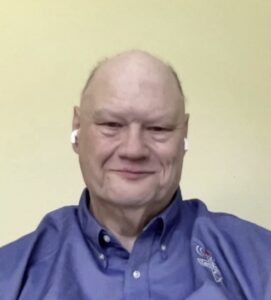
Today I’m with Steve Stroh, a well-known expert in amateur radio and creator and writer of Zero Retries, a widely read weekly newsletter about amateur radio. He talks about today and tomorrow. He explains software-defined radios, the uses of amateur radio by different people for a wide range of needs. He talks about Starlink, the first telecommunication system that was born natively in the 21st century. He emphasizes the importance of open source and the influence and use of embedded AI in radio systems. He goes into what he calls the vibrant future ahead of amateur radio. Have a listen.
Steve, I’m really delighted to meet you in person, if we can call it that. I’ve done a lot of reading of your stuff and I have a lot of questions.
STEVE
Okay.
JANE
And it’s a real pleasure to have you here.
STEVE
It’s a pleasure to meet you, Jane.
A curious techie
I’ll start by asking you a question I ask everybody. If you had to describe yourself like in one sentence, I am a…
STEVE
A curious techie. I’m biased about learning about technical things. I was in a shop just yesterday that makes, what’s called, additive machining. And it’s like 3D printing only you do it with metal. I have no professional background or any background at all in that, but I found it fascinating and learned about additive manufacturing just a little bit. But I’m always curious about anything technical, especially radio. Anything radio kind of short circuits my brain. I just got to learn more.
What is amateur radio?
I’d like to start with a question because a lot of my listeners are, I would say, normal people who may not necessarily understand what amateur radio is. I certainly had no idea until I studied a lot of your work.
How would you explain amateur radio to someone who doesn’t know what it is?
STEVE
Most people would know amateur radio as ham radio, and they’ve at least heard the term somewhere in their life. The most common conception about ham radio or amateur radio, as I prefer to call it, that’s the formal name of the licensed service by the FCC, is that you hear about an older gentleman who likes to tap on a Morse code key communicating with people all over the world. It used to be that, and that used to be a dominant activity, but no longer.
It’s not actually about any one thing. It’s about a capability that an individual can have to use radio frequencies that span the gamut from low frequencies that can echo all over the world bouncing off the ionosphere, literally anywhere in the world, but to a lot of the same frequencies that are used for cellular telephone and point-to-point microwave communication. That’s the beauty of amateur radio, is that it gives you access to this very broad spectrum of frequencies to do interesting things with. We can certainly discuss all the interesting things you can do with it.
Radio operators on the “unsinkable” Titanic
Yes. You made a reference in one of our conversations earlier about the Titanic.
STEVE
I just saw a story which refreshed me on the specifics of the radio system on the Titanic. It was installed purely for the convenience of the high-paying passengers to be able to send telegrams back and forth off the ship. Businessmen wanted to do things. They would have a conversation on the Titanic and then they would send a buy or sell order to their broker via radio-telegraph. And this was back in the day when the only communications was via Morse code. And there was no thought of the safety function of being able to call for help because the Titanic was considered to be unsinkable. But the only reason that anybody came to the rescue of the Titanic passengers was because the radio operators were able to get off a distress call using the radio equipment.
The beginning of radio services in 1912
And until then, radio communications was completely unregulated. There were the experimenters like I would’ve been a hundred years ago. There were people that were doing a little bit of experimental broadcasting and there was the ship to shore and there was also the intercontinental telegraphs. So after that, the value of radio as a regulated service with reserved allocations of frequencies and, for example, mandatory radio operators on ships that had to listen to certain frequencies 24/7 and be able to respond, that was all codified into law. And I believe it was the Radio Act of 1912 here in the U.S. and similar activities in other countries. So that was kind of the beginning of all of the radio services.
JANE
It’s quite a technology, isn’t it, when you think that it goes across borders, it goes across countries, it goes across languages?
STEVE
It really is amazing. And when you start to understand viscerally how radio actually works, it’s an endless rabbit hole and where you can’t beat physics, but you can cheat physics, especially when it comes to radio. So for example, in your cell phone, there are probably about, oh, could be as many as 10 different radios in chip form. All of those radios have to have antennas. They have to be able to radiate their signal outside of the device. And how you make that work in something you hold in your hand is just endlessly fascinating.
I know a lot about radio. And yet when I put my phone down on the transmission hump of the car and it’s still navigating me receiving GPS signals inside the car, deep inside the car, it shouldn’t work that well. And yet we have figured out how to do it very, very well. And unlike a consumer that just has to buy a packaged device and use it, we have the ability to make our own radios and modify radios and experiment with radios and experiment with antennas and it’s just endlessly fascinating. That to me is the very best part of amateur radio, is that it allows you to learn about radio technology in a hands-on basis.
We need more people who understand radio
Right.
STEVE
And boy, do we need more radio folks that understand radio.
JANE
Not enough people understand it. Is that what you’re saying?
STEVE
Not anymore. No. One of my favorite examples is a software developer that wants to talk their application through a radio to communicate with some other device and they can’t figure out why it doesn’t work. And it’s little things like they want to send a very long piece of data through a radio link. And if they’re using, for example, Bluetooth to do that communication, Bluetooth actually operates on the same frequency band as your microwave oven. And if you happen to have a microwave oven in the immediate vicinity of what you’re trying to communicate with, it doesn’t work so well. So if you understand the physics of radio, you can do a better job making your app that wants to talk through radio work better.
JANE
And you have a license, don’t you?
STEVE
I do.
JANE
People need to have a license in order to use it?
License and call sign needed to transmit on amateur radio bands
People need to have a license to transmit on the amateur radio bands. My particular amateur radio license has assigned me the call sign N8GNJ. There’s no significance to those letters. It just happens to be the random allocation of the call sign when I got my license. And it was a lot better than the previous. I upgraded into a class and that entitled me to a shorter call sign, this N8GNJ. And my previous call sign was KA8WCL, which was just terrible. And it was terrible to say it over the air. So I got N8GNJ and I was happy with it and I haven’t changed it.
JANE
So people get a call sign? You can’t make up your own?
STEVE
No, you cannot. Well, sorry. Well, you can’t make up your own, but you can go shopping for one. The FCC changed the regulations probably two decades ago now, where if a call sign had been previously assigned and was not being used, you could apply to acquire that call sign. And a lot of people made use of that for like they wanted to honor their parent by using their call sign, their late parent.
JANE
Right.
STEVE
And then there are other ones that … So for example, there’s probably an N8TCP that somebody associated with the networking industry likes because it’s the first three letters of TCP/IP, that sort of thing. A lot of people just enjoy doing that. And it gives them a small sense of satisfaction every time they use that call sign because it’s just cool to them.
What does Zero Retries mean?
Steve, you have a publication called Zero Retries?
STEVE
Yes.
JANE
I was just mystified as to what that name could mean and why you chose that name. And I’d like you to talk a little bit about that publication.
STEVE
The name, first of all, is a term from packet radio, which is why I chose to get involved in amateur radio. We can talk about packet radio a bit.
Zero retries, in packet radio, you transmit a packet of data and then you tag a check some onto that transmission which says, “Here’s a validation of what I’m sending you. ” And then at the receiving end, you unpack the data that you got and then you unpack the check sum. And if they don’t match, then they says, “Oh, there must have been an error in transmission.” So then it asks for a retry, you retransmit. So if there’s no retries, zero retries, then you have a perfect transmission and you can proceed with the communication. You just go back and forth. So zero retries is an ideal state of communicating information. That, and it was also the name of a now defunct newsletter for a group I was associated with. And I always thought it was a catchy title. So it’s both a play on words and an homage.
What Zero Retries is my newsletter that talks about the techier side of amateur radio, mostly data communications. That’s my background and my passion. But also I talk about things like some certain aspects of satellite, amateur radio satellite, and microwave communications and just generally diving a little deeper into the technical aspects of amateur radio. And it’s a newsletter. I tried to make it topical.
Zero Retries, a hobby that took over his life
As a former employer once said about the company he founded, Zero Retries was a hobby that kind of took over my life. Honestly, I thought the reason I started it is that I was frustrated with the amateur radio media not covering all of the really interesting technological innovation that was going on in amateur radio. And I was frustrated about that. And I was a writer, a lapsed writer, about the wireless industry. And then there came to be this platform called Substack. “Oh, you want to start a newsletter? Let us help. And you basically just start writing, an audience will find you and we’ll take care of all of the nuts and bolts of publishing an electronic newsletter.” That sounded good to me. And they are good on that promise. They do a fantastic job on the backend. I just don’t have to hassle with worrying about whether or not someone got their email on a particular week if, for example, their inbox is full. And Substack handles the retries or dropping them out or whatever. I just don’t have to deal with what I call the administrivia. I just basically write.
So I started in July 2021, I think, yeah. Or 2020. It’s been a while. I honestly thought I would run out of things to talk about after no more than a couple of months. I mean, once I got this stuff out of my system, I figured it might even devolve to once a month. There just wasn’t that much going on, or so I thought. But I kept finding things and I found an audience and people started bringing stuff to my attention. And so I kept going every week, and I’ve kept going every week for five years now.
JANE
I see you have 3,500 subscribers.
STEVE
Correct.
JANE
Congratulations.
STEVE
Thank you.
JANE
That’s an achievement.
Major accomplishment of 3,500 subscribers, but reaching many more people
It is. And that’s actually kind of understating it because there’s a fair number of people who don’t care to subscribe by email. They don’t want their email inbox cluttered up. So they follow Zero Retries through what’s called RSS. And then there are many, many other pass-along readers who they’ll send a story along to a friend, et cetera. And I’ve got entire… Apparently there are entire clubs that are for some reason receiving it one subscription and automatically redistributing, which is fine.
My policy with Zero Retries is that everything I publish is for free because that is in the spirit of amateur radio. And I could talk a little bit more about how I consider amateur radio to be the original open source sharing system because amateur radio has always thrived about sharing the technical information.
LINUX and a paradigm shift for amateur radio
You say it’s original open source. Talk about that a little bit.
STEVE
Well, keep in mind that there was no internet back in the early 1900s, but we did have magazines. And magazines were considered the primary communication media for technical things like radio experimentation.
So the amateur radio operators of the era delighted in writing articles about their radio system and publishing the intimate details like the schematic diagram of the electronics. Companies routinely shared the schematics of their devices. Some radio manufacturers even had their own magazines to communicate about their products. So there was this culture of sharing that was epitomized by the open source movement here that says, “We share all of our software, sometimes hardware designs in public, and we encourage people to modify them and do more interesting things.” And that’s the radio hobbyists of that era did the same thing.
JANE
You talked about Linux on the radio and you said it’s a paradigm shift for amateur radio.
STEVE
Well, Linux is kind of the thing that powers an awful lot of products and just like everything else in electronic these days. I mean, I look around my house, I watch light bulbs boot up in software. So that’s how silly this has gotten, but it really is the easiest way to make an electronic product these days, is to instead of build it up from discrete components, is you just basically build it around a microprocessor. And that microprocessor has to be running some kind of operating system to do anything really useful. And Linux is free and available. Linux is powering countless devices including radios. You dig deep enough in the average amateur radio or many other radio systems is you’ll find Linux.
I think probably what you were referring to was software-defined radio is the real paradigm shift-
JANE
Yes.
Software-defined radio
… in amateur radio, and that is truly changing things.
JANE
Can you talk about that a little bit? That really intrigued me, software-defined radio.
STEVE
Well, again, this is just as the electronics industry has consolidated into anything sophisticated, you start with a processor, and then you do as much as you possibly can in software because software is inexpensive and it’s free to replicate. There’s no incremental cost doing millions of copies of a particular piece of software. So software is the most efficient and the most effective way to do a particular task in an electronic system.
That wasn’t really affecting radio communications too much. There have been microprocessors and radios ever since there’s been microprocessors, but they were doing mundane things like handling the control panel, the display on the control panel, things like that.
What changed things is we got sophisticated enough electronics to create what was called a software-defined radio. The military had this for 20 years before the rest of the world had it, but we’ve had it for about 20 years now. And basically it’s the same idea of having this one piece of electronics in the middle of a radio and software does almost everything in the radio. The signal coming in to the radio through the antenna connector is immediately digitized into 1s and 0s, and that’s done by the software-defined radio. And then you have a whole series of other computing devices. And what we used to have to do in discrete components, mixers, up converters, down converters, filters, that is all done as functions of software now. The 1s and 0s come in, the computer takes over, does the very sophisticated processing, and then presents it as either data or video or audio or whatever the rate you need to do at the time. And you can change the function of the radio using software. You don’t have to physically change the hardware. You can change what the radio does.
This got to the absurd point where I was told by a manufacturer that they had this one very capable piece of hardware and they were doing software-defined radio back before the FCC, the Federal Communications Commission, actually understood software-defined radio. So every time a customer wanted a different function, they would write different software and they would then load it onto the radio and they would send the same radio back to the FCC numerous times with just different software in it. And they would put a different model number on it and they would get that particular model certified by the FCC, and it was simply software. The FCC at the time did not truly understand what software-defined radio was about because they had nearly a century of history of dealing with hardware-defined radios.
JANE
Interesting.
More flexibility because not commercial
It is fascinating. Now I am not a programmer, but I can appreciate… Again, I’m a techie, and I appreciate how this technology has really fundamentally changed things, pulling it back to amateur radio because we do not have rigid technical specifications about what our radios are supposed to be doing. For example, a police radio has very rigid performance specifications that cannot be altered and the police department doesn’t want the functions altered, the FCC doesn’t want the functions altered, the radio manufacturer doesn’t want the functions altered. So that radio does what it does and it’s going to stay doing what it does as designed for the usable lifetime of the radio.
We, on the other hand, can pretty much do what we’re curious to do because our service is flexible. It’s not a commercial service with functional requirements. And we have the ability to change our radios. And so it is in fact happening that we are getting more and more radios coming into being marketed specifically for amateur radio that are entirely software-defined radios, which is just fascinating.
Three limitations: non-commercial, allocated bands, no encryption
JANE
But somewhere in the things I read from you, there were three limitations that had to be respected.
STEVE
Oh, that’s a general overview of the amateur radio service. You’re not allowed to use amateur radio spectrum for commercial use.
JANE
Right.
STEVE
It is entirely a hobby/experimental service. You stay within the allocated bands. You don’t go outside. Your amateur radio license gives you the, literally, license to use certain portions of spectrum. It is not a free for all. You’re not allowed to go onto police frequencies and transmit there, et cetera. The third one, that we do not want people to sneak commercial communications into amateur radio. So the FCC wrote that into the regulations that says you cannot deliberately obfuscate a communication, which is generally interpreted to be a blanket prohibition on encryption. I differ with that interpretation a bit.
JANE
How so?
STEVE
Well, for example, we have many places in amateur radio where we touch the internet, including our parallel amateur radio networks that work and act very much like the internet. In fact, if you think of the internet as a network of networks, we’re just another network that can plug into the internet. There are networks that use this exact same technical standards as the internet. So it’s natural that there is some flow of data back and forth between these amateur radio networks and the internet. For example, I cannot go to the FCC website to look up someone else’s call sign to see if they are a legitimate call sign. Sometimes we get people that like to play around and they’ll look up the call sign of somebody they know to be dead and they will use that call sign. So you have to be able to validate sometimes who is legitimate and who is not.
The only way to talk to the FCC website is to use what’s called HTTPS, Hypertext Transfer Protocol Secure, HTTPS. So if I’m coming out of an amateur radio network into the FCC website, that communication is in fact encrypted. It’s HTTPS. I’m not using HTTPS out of choice. That decision was made for me by the FCC. I’m not deliberately obfuscating the communication. I’m not trying to keep it secret. It just happens to be that the protocol that I have to use to communicate with the FCC website is a secure protocol that happens to use encryption. My intent is not to obfuscate.
So I think there’s an argument to be made, yet to be tested, that such things as HTTPS are not intended to be encryption or the user of that is not intended to encrypt the communication. So that’s my…
JANE
Interesting.
STEVE
And that is an argument that can be made. A lot of my fellow hams would vehemently disagree, do vehemently disagree with that interpretation, that potential interpretation. It’s a topic of discussion. If we want to be a modern service that does many of the same things and has interoperability with the internet, encryption is just the lay of the land on the internet for very good reasons.
With Starlink: flexibility, programmable, experimentation and new capabilities.
How does Starlink fit into all this? I’ve always pictured Starlink as this magical way of people anywhere in the world. I realize what you need to do and you have to buy the thing. Probably a lot of people can’t afford it. But I mean potentially it’s a way of connecting the world, wouldn’t you say?
STEVE
It absolutely is a way of connecting the world, and it has. This is a rabbit hole I will happily dive deep into.
JANE
Okay, good.
STEVE
So stop me when you’ve had enough.
JANE
Okay. So go ahead, dive.
STEVE
We’ve had satellite communications since the ’60s. We’ve had what are called low-earth orbit communications since the mid ’60s where satellites are in an orbit that makes them go around the world thousands of miles per hour. So any given satellite is only overhead for maybe 10 minutes, including the International Space Station, which very technically is a satellite.
The trick is that if you want to have a reasonable connection with that satellite, you have to track it with your directional antennas. So as that satellite goes overhead, you have to have a mechanical antenna moving, following its path. And you have to know where it’s going to be to aim the antenna to not … You can’t just wait for it. You have to know which part of the sky it’s going to show up in. And from that point, you can track it.
Starlink and phased array, universal communications
Starlink did a thing that nobody thought really was feasible, and that’s what’s called phased array antennas. And on both the satellite and the ground terminal, they have an array of tiny, tiny little antennas, not microscopic, but certainly thousandths of an inch or so. And again, because of the power of software and math and advanced electronics, each one of these antennas can be excited in a unique way to have the effect of electronically tracking that satellite as it goes across. So all of a sudden you have a very high quality signal between the satellite and the ground terminal. So your bandwidth can be very high and you can then do an awful lot of physical tricks to get lots of data through there.
So the net effect is that you now have a broadband internet connection via satellite anywhere in the world because the satellite constellation of Starlink is dense enough, now thousands of satellites up in orbit in all different kind … It looks like one of those pictures of the atom where there’s this … If you look at a visualization of all of the satellite, of Starlink satellites over the earth, you can’t believe that they don’t run into each other, but they don’t.
And then one of the hallmarks of Starlink is that it is in fact software-defined radio in every aspect. My particular Starlink reboots about 3 o’clock every morning and gets a new software download. I don’t know how often they update the satellites. And then every new batch of satellites that SpaceX sends up is better than the one before. It has better hardware, more memory, faster processor, et cetera, better radios. So the net effect is that we now have worldwide universal communications.
And one of the things that was problematic for people that were operating around the world is that like, for example, a ship or a plane, you’ve got different technical standards when you cross borders. There’s even different technical standards at times when you cross the border from the U.S. to Canada and certainly to Mexico. So Starlink operates worldwide with one universal technical standard.
Starlink, first telecommunication system born natively in the 21st century
I like to mention that Starlink was the first telecommunication system that was born natively in the 21st century. So there’s no mainframes in the background. It just works. My prediction is that Starlink will eventually start their own mobile phone service that will operate when you are out of the range of a terrestrial phone service. They’ll have roaming arrangements with the big guys in every country, but they’ll do their own thing.
JANE
I remember something about Starlink and Ukraine.
STEVE
Early in the war, Russia was able to hack the older satellite communication system that Ukraine used, and Starlink rushed a delivery of their satellites into Ukraine for free and got them back on in communication. And later, Russia started using Starlink, although it’s never been legally licensed in Russia. And eventually things worked out that Starlink turned off all of the satellite terminals that Russia was using, and that threw Russia into chaos, but Ukraine was allowed to keep using it. They have flown Starlink terminals on some of the larger drones to allow the drone to be in constant communication, including video.
JANE
Wow.
STEVE
So yeah, it works amazingly well. And increasingly, a lot of commercial planes are getting equipped with Starlink.
JANE
Wow.
STEVE
One of the funnier moments was when Starlink came out with what’s called the mini, which is a terminal about the size of a dinner tray, you’re able to slide it under the windshield of a dashboard or even a light plane and it would keep in communication so these light planes were able to stream video into the backseat on a cross country trip. And so many commercial planes are getting Starlink service now because it works much, much better than the older geostationary services that were previously your only solution for works anywhere in the world.
New tech hams, transactional, ham radio for own purposes
One thing you talked about with me in our exchanges before, you said that we’re at a unique moment, a convergence point, and that there are new tech people coming in to innovate. And you said that there’s, you call it, the new tech hams and you said you would expand on that demographic.
STEVE
New tech hams is a term that I coined for something I only became aware of after I started writing Zero Retries. New tech hams are coming into amateur radio not with the traditional means of, “Oh, I’d like to play with radio. I’d like to talk to people overseas. I want to have a walkie-talkie. I want to do public service. I want to be able to prepare for emergency communications.” New tech hams are coming in out of a sense of technical curiosity.
Perfect example is an engineering student who gets to play with radio technology in the classroom, but only in a very limited scope. And the instructor explains to them that if you get your ham radio license, you can do a lot more interesting things. So they get their amateur radio license solely to do this kind of experiments. They’re not into the traditional amateur radio activities of getting on HF to be able to work, talk overseas, or even to do emergency communications, any of the recreational things. They’re very focused. They’re what I call transactional. And it sounds like a pejorative, it’s not. They’re focused on what they want to get out of amateur radio.
Other people are coming in. So one guy I know of got his amateur radio license to help build out amateur radio microwave networks. In order for him to participate in this network, he had to be a licensed amateur radio operator. So the test was no problem. He knew all the theories so he just very perfunctorily went and got his amateur radio license. And turns out that he happens to be an IT professional in a big company and he deploys these wifi systems inside buildings. And he says, “Well, this is interesting, but outdoor is a whole new thing. And so I’d like to play with these interesting folks on the weekends.” So he got his amateur radio license. He’s a classic new tech cam.
GNU Radio Conference
Another class of new tech hams is the folks that are using software-defined radio, the engineers, the technicians that are developing new systems based around software-defined radio for whatever their company happens to be doing. I went to a conference last year called the GNU Radio Conference. More than half of the people who had attended that conference were already licensed as amateur radio operators unbeknownst to me. And they had their amateur radio license purely as an adjunct to their professional usage of it. And they were curious. Everybody gets an idea of something they’d like to try. So they have their amateur radio license to dabble on the weekends with the stuff that they play with during the week, stuff that they can’t do at work but they can do at home.
Other new tech hams are software developers. They learn that they can… Maybe Linux software development isn’t quite as lucrative as it used to be, but they hear about software-defined radio and they say, “Wow, maybe I can do something interesting with that.” So they get their amateur radio license to be able to do software, not only to write software, but actually use that software on the air. Students, IT developers, hackers.
Hacking – we need to understand in order to stop
Hackers are another area of growth in amateur radio because they learn about all of the ways that we’ve done radio communications not so smart. One example was there’s a tornado siren, I think, in some southern major city. I don’t remember which one it was specifically. Probably best that I don’t. And they had a tornado siren system that was activated by a radio signal on a unpublished frequency using a very simple set of touch tones that they would periodically test. And some bright hacker recorded that transmission and played it back and set off the sirens. And so hackers say, “Well, this is silly.”
There’s certainly bad uses of hacking in radio technology, not necessarily in ham radio, but the hackers say, “Well, I’d like to learn more about what the actual mechanics and the physics of radio is.” So they get their amateur radio license to be able to experiment on amateur radio spectrum. And they learn an awful lot because you get to, again, play with the actual nuts and bolts, the antennas. You build your own antennas, you can build your own radios, you can modify radios and you find a very receptive audience for your efforts.
JANE
I think there must be a lot of exploitation of that in a bad sense.
STEVE
Okay. So if we have safe crackers out there, we need people who know how to build better safes.
JANE
Good point. And so maybe the signs of the safe crackers will stimulate building better safes.
STEVE
Yes.
JANE
That’s a very good response.
Ukraine drones – impressive life safety critical work
Well, you only need to look at the example again of what’s happening in Ukraine. The reason that the Ukraine drones are, as I understand it, pretty successfully defending Ukraine, is entirely on the technology of their drones. And you’ve got three components in a drone. You’ve got the payload of the munition, you’ve got the airframe, and you’ve got the communications. And that communications is getting to be a very, very contested environment.
The Russians are innovating in ways to jam drones, so are the Ukrainians. So you have to be more and more sophisticated about your radio technology to keep those drones actually functioning. In my opinion, the people that are actually building and operating those drones are now the world’s experts at very, very sophisticated, very robust, very capable radio systems. And I guarantee you in those drones, there is not a hardware radio that has a fixed function. It’s a software-defined radio that is operating new software every time the mission goes up. So yes, kindred spirits about learning about radio technology, how to build better and better radio technology, but there is life safety critical and we just dabble. I’m in awe of what they’re doing in Ukraine with radio technology.
Embedded AI systems running on local computing hardware
Yeah. I wanted to sort of shift the angle a little bit and get your take on AI in this context. I mean, AI seems to be influencing everything, and I’m sure because we’re talking about software as a major agent here. What role is AI playing? How are people using it? What’s going on?
STEVE
Well, amateur radio, just like every other field, is getting inundated with AI slop. There are YouTube channels that are about amateur radio that are entirely AI-generated. There’s newsletters that are being formed on websites. Ignoring all of that, what is even more interesting, AI is being increasingly used in radio systems. And the Ukraine drones are a perfect example. This came out of an earlier technology called cognitive radio where the radio would listen to the environment it was in and say, “Spectrum X is quiet, therefore I’m allowed to use it.” So it will be opportunistic about where it chooses to transmit. But all of that stuff was, back in the day, that was determined by algorithms that were written by humans, our best guess of what we could do.
What’s happening now is that we are now increasingly turning to AI to automate those functions. And in some cases, we don’t have any idea how it’s actually making the decisions it does, it just does. The AIs that I’m talking about are what are called embedded AIs. They’re not the services that are out on the internet running on these massive server farms, et cetera. These are all software that’s running on a local computer that is doing a relatively fixed function.
Machine learning to make realistic sounding voices
So one example of kind of an AI called machine learning was that one of the challenges in radio technology in general is to have a realistic sounding voice despite it being digitized and compressed because we like using the minimal amount of bandwidth of radio spectrum that we need to get a communication through. And one way we can do that is to digitize a human voice and then compress it down so that we can get it through in a very small portion of spectrum.
We’ve had digital voice systems for probably 20 years in amateur radio, but they were never that good. A very bright group of people thought, “Well, let’s try this machine learning approach where we give it a whole bunch of samples and then we tell it what we want the end result to be. We want realistic sounding speech. We want it to occupy a minimum amount of spectrum or bandwidth and let it figure it out.” And it did.
Free Digital Voice, high quality, minimum bandwidth
There’s a system called free DV, free digital voice, that is now doing amazing things. One example is that because it’s digital, it can ride through an awful lot of interference. It can also ride through what’s called fading, and on our amateur radio, HF bands, the short wave bands. Because we’re bouncing off layers of the atmosphere, there’s times when the signal fades out and then comes back. That’s called fading. And there’s noise crashes, lightning happening. Somewhere in the world, there’s a lightning storm. So all of these effects drastically influence a conventional analog voice communication but not digital. So you’ve got this incredible digital voice quality, even though it’s occupying a very minimal amount of bandwidth. It’s just the effect is amazing.
Transcription service node making logging names and other services easy
Another gentleman that I know of that talked at our Zero Retries’ digital conference last fall, he was trying to participate in what’s called a net. Lots of people check in and they give their call sign very quickly and he was having trouble parsing out those call signs and writing them down in a notebook. And so he created what’s called a transcription service node, and that was an AI that was running on a Raspberry Pi that was doing digital. It was listening to the transmission and it was transcribing it in real time on his screen so he didn’t have to do the actual logging.
And there’s all kinds of AIs being applied to different things. You could do this manually, but now you can just talk to an AI and say, “I want to listen on this frequency for my buddy. If you hear him, let me know. Send me a text on my phone so I can go talk to my buddy.” Anything you can do with a human brain now, you’re going to be able to do with an AI. And again, these are embedded AIs. They’re living on a local computer. They’re not needing internet access to do their job. You can ask it to do pretty much whatever you want.
JANE
Well, it’s obvious that AI has quite a role to play in amateur radio. How do you see the future of amateur radio? Future, I don’t know, 20, 25 years is not that far away really.
The vibrant future of amateur radio
I think amateur radio has a vibrant future ahead of it because we need people to understand radio technology, and we need a lot more of them because now we used to think that, for example, cell phones were a nice to have but not critical. And now nobody has a landline anymore. We live and die by our cell phones, literally live and die. I mean, you get into an accident and you have to call for help or your car automatically calls for help. We need to have people that really understand this and you can’t … It’s proving very hard to scale up this workforce that has this kind of background and expertise by just recruiting them and training them by companies. They learn what you teach them but nothing more. And they don’t have enough intuitive feel about … And unlike wired communication, radio is … There’s a certain element of … I hesitate to use this word, it’s not magic, but you really need-
JANE
I was going to say mystery. Mystery. It’s mysterious.
STEVE
Well, you have to have more of an empirical feel for radio than you do with wired networking because wired networks are entirely predictable. You connect wires into networks. Generally the network behavior is completely predictable and understandable and reliable. Radio, anything can happen. Because for example, you can have somebody interfering with your transmission, some other radio transmission that will cause your radio system to behave unpredictably. So you really, really need to have more of an intuitive feel to radio technology if you’re going to do your job really, really well. Not everybody has to have that. The guys hanging up wifi access points or putting up antennas on cell tower, probably not, but the ones who are designing it, absolutely. And repairing it and troubleshooting problems? Yeah, they’re the kinds that need that background. And amateur radio is a training ground to get people learning about that stuff.
Amateur radio for emergency communications even if power grid down
Amateur radio is also a fantastic emergency communications capability because we are completely independent of the internet. Anything that we do on the internet is optional, but the radios keep working even if the internet goes away. In fact, a lot of people take it as a point of pride that their radios will keep working even if the power grid goes down because they have backup power. It’s one of the things that kind of gets drilled into you as an amateur radio operator to have power.
Amateur radio is definitely going to get much more technical than it is now. You can buy a radio and play with it and not really have much of an intuitive feel of how it works, but radios now are going to be much more sophisticated, much more capable and you’ll be able to hack them. And being able to hack them with software-defined radio, especially if you put AI in the mix, you’ll be able to tell the radio how you want it to work. And because we’re an experimental service, you can do these sorts of things. It’s expected to do these sorts of things.
So radio is going to change just because of the demographics are changing. The digital natives are coming in. And they expect to be able to use everything else they do in their life. They use an app on their phone. And finally we’re getting decent apps on phones for amateur radio activities, so that’s kind of fun to watch.
JANE
One thing you said, Steve, a couple minutes ago, you said that without the internet, we can survive. And you said without electricity, we can survive because we have backup energy.
STEVE
Mm-hmm.
Backup energy in disasters: Parks and Summits on the Air
Did I understand you correctly? What is that backup energy that we have?
STEVE
Because amateur radio has traditionally had this mission of providing emergency communications when other things go down, generally you don’t have just one thing go down. Well, you can have the phone lines go down, you can have your local internet access goes down and power goes down. And in my area, it goes down all the time. And it’s kind of a point of pride and it’s one of the many educational elements that if you start learning about amateur radio, backup and emergency power is one of those things that is kind of drilled into you that you can do this. So know how your amateur radio gear can be powered by batteries.
And we even encapsulate this to a really interesting extreme. We have this activity called Parks on the Air and Summits on the Air where people go out into the field, carry a very small amateur radio system in a backpack. They go to a park, they unpack their system, put it on a park bench, throw a wire antenna up in a tree and pull out a battery and they start communicating from that with no infrastructure at all.
Field Day – a real life test with solar panels and battery bank
We also have an activity every June called Field Day. You go out into a field literally in a tent or some other … It’s a simulated emergency where for 24 hours you’re not allowed to plug into commercial power. You have to provide your own power, be it solar, be it a big bank of batteries, be it a generator. You have to be able to independently communicate without power and without regular infrastructure. So there are some places that have these incredible antenna systems. You walk away from all of that and you basically said, “Okay, we just had a major hurricane. Everything got wiped out. It’s only what you can carry doing a simulated emergency.” So backup power, it’s incredibly easy now. It’s plug and play. For one or two solar panels and a battery bank, charging a battery bank, that’s enough to keep your radio on indefinitely.
JANE
Yeah. Well, I’ll have to think about that. Talk to my husband about that and maybe we’ll do something about that.
What concrete steps can we, normal people, take in our lives to make the future better, to make the future more sure?
Support renewable energy, vote for people who do
Vote for the people who have proven that, however imperfectly, their main goal is to make us better. There’s no downside whatsoever to embracing renewable energy now. It’s not that expensive. And the main knock that there used to be about solar is that you were plugging it into the grid. No more. You now have these battery systems where there are people that are living entirely off the grid functionally. They’re still connected, but for them, the grid is optional. Their solar panels charge a battery. And at night the battery discharges into the home, powering everything, and then the next morning the sun comes up and starts charging the battery back up again. Electric vehicles are more practical than ever.
If you really look at it, if you care to look at it, it’s the only sane alternative. The only reason that’s stopping us at the moment, my wife and I, is that we’re in a transition period where we’re probably going to move in the next couple of years so we aren’t investing in this particular home. But if we were planning to stay here for the next five years, we would absolutely be upgrading to solar panels, a big battery bank and an EV. But the one thing, vote, at least here in the U.S.
How Steve sees his future: include video
Well, yeah. And in France too, we need to think carefully about how we vote. I’d like to conclude with a question asking you about your, if you’re willing to talk about it, how do you see your work evolving in the future? I mean, you’ve just done so much already. What direction are you going now? What are your ideas?
STEVE
I started Zero Retries as a newsletter because I was a writer, and that’s just the way I process information. My brain just seems to be organized around words and text. It endlessly frustrates me that so much information now is published on video and you have to sit through a video. I’ve even sped up videos to 2X to just try and get through it. And increasingly I’m throwing a video at a transcription service and say, “Give me the text so I can absorb it five times faster than watching a video.”
But the video is the way of the world these days. It’s become obvious to me that even some of the YouTube channels that I follow have five times the subscribership of Zero Retries, and those are considered modest, just barely worth doing. So it’s obvious to me that if I want to keep evangelizing amateur radio in the 21st century, I’m going to have to get the on video. And so that’s a job.
I think that books are still a really good way to transmit information when you want to dive into a focused subject. I love the O’Reilly books for the computer industry that focused on one particular Unix utility. And then of course, there’s the Four Dummies books. In this era, you can write a book as small and as detailed as you can as you want and then self-publish it either actually in print, using print on demand or PDF. That’s an ongoing project.
Zero Retries Digital Conference: bleeding edge technology
And of course my wife and I do what’s called the Zero Retries Digital Conference. We did our first one last year. In the absence of that type of conference and amateur radio, there had been like five that we loved, and they just gradually dropped out one by one. And we had some ideas that rose out of Zero Retries. And we did our first conference last year in October and it worked out great. And we’re going to do another one this year in October. And it’s a very focused, distilled look at the technical aspects of amateur radio and the most interesting ones.
The thing that people tell me most often about Zero Retries is that they thought they were the only ones who were thinking these things about what is interesting and useful in amateur radio. And instead of the image of amateur radio, of older gentlemen sitting in a basement tapping on a Morse code key, they like the idea that this is bleeding edge technology that anybody can get involved in. There are literally no restrictions on who can get involved in amateur radio, especially age. They’re kids as young as six that have gotten their amateur radio license. And they’re fully interoperable. They have full privileges, they’re not restricted. And you can get an amateur radio license if you’re blind or you’re deaf. You can still participate equally as well, especially now with technology accommodations.
There are quadriplegic amateur radio operators because they have some ability to tap on the equivalent of a Morse code key. So it’s a very stimulating activity when you start to learn about all of the different things that you can do. It’s not just the technical end of things like I like to do it. And it’s also a very social activity if you choose to.
JANE
A very human.
STEVE
Well, in the end, even though most of my radios have computers attached to them, in the end I’m trying to communicate with other humans. So when I send an email to a buddy, it’s going through a computer, but it ends up talking to another human. That’s the fun part.
So like I said, Zero Retries kind of took over my life, and it’s a happy accident. After two years, if I had a few hundred subscribers, I probably would have tapered off doing it. But 3,500 people found their way to me and they want to hear what I have to say every week, so that’s a powerful motivation to keep going. And they keep telling me that I’m doing useful things and I’m saying things that nobody else is willing to say.
Wow. People like this, what I’m doing
And the classic experience of a Zero Retries article that I write is somebody’s laboring away on this little passion project that they’re working on and they’re doing it just to scratch their own itch. And then I discover it and sometimes I talk to them, sometimes I don’t, and I just mention it. Basically I figure if it’s on the internet, they don’t mind people knowing about it. And so I expose it in Zero Retries and all of a sudden they say, “Wow. People like this, what I’m doing.” They didn’t have their own audience, but through Zero Retries, they found an audience. It’s not that people are glomming onto me, they’re looking at Zero Retries to find interesting stuff and then they go support that project, get involved with that project. So thanks Zero Retries, and then I’m out of the loop, which is fine. That’s the idea.
JANE
You’re helping a lot of people who are creating things and you’re helping the people who are influenced by those people. It’s like a concentric circles.
STEVE
It’s a virtuous cycle or a positive feedback loop, as we like to call it in electronics, that I have more fun learning about this stuff and then writing about it as the people do, reading about it passively and then maybe getting involved in a project. But it had to be fun for me. Believe me, I operate Zero Retries as a business just to help pay the bills that I incur, but it’s absolutely nothing like a job. I’m retired so there’s no profit motive in it for me. So it’s got to be fun and it’s got to be useful. Those are the criteria. And so far so good. And it’s been a lot of fun and I’ll do it as long as I can do it and as long as it feels like I’m doing something useful.
Zero Retries is paying back four decades
And in the end, I’m paying back the decades. I’ve been an amateur radio operator now for four decades. Universally in those four decades, people have been incredibly generous to me. They have taught me things that I was curious about. They have lent me equipment. They have helped me build things. They have held my hand when I’m frustrated beyond belief that I can’t make something work. Zero Retries is my way of paying back all of those things and paying it forward to some extent, but paying it back for all of that incredible things.
There were two major job shifts that happened to me because of my involvement in amateur radio. So I can’t not give back if I have the ability. And I have the ability, so yeah, it feels like the right thing to do.
JANE
One thing I do, you were talking earlier about reading or watching videos, my editor does an audio podcast of our conversation. Then when that’s done, I pay for it to be transcribed at a human-generated transcript. And I’ve been told that people appreciate that they can scan the transcript and learn fast. As what you said earlier, they can learn what they want to do. They can decide to listen or not. It doesn’t matter because the information can be accessed in different ways. I think that’s really important between the written word and the voice and the image.
STEVE
I think that that’s the most important contribution in the end of artificial intelligence is that it blends those things all together and it makes it seamless back and forth. There’s a service in Substack that if you enable it will turn my text into spoken words, not by me. So there are people that learn better hearing it. There are other people that-
JANE
Or people who can’t read are blind, for example.
STEVE
Yeah. Or there are people that really, really, really, they learn better by watching something visually. So yes, thank you. Thank you for doing that, and that will be a fantastic resource. I will happily link to it when it’s done.
JANE
Great.
STEVE
Yeah, it’s exactly the way I would do it when I do start to producing video content of my own.
JANE
Very interesting. I want to thank you for sharing all that.
STEVE
You’re welcome, Jane.
JANE
Well, I hope we have another chance to talk.
STEVE
I’d love that. Thank you, Jane. Really had a good time.
 SUBSCRIBE TO IMAGINIZE WORLD ON YOUTUBE
We talk with forward thinkers, scifi visionaries and pioneering organizations about people and society, AI and humans, the earth and survival. Read more Imaginize.World
